Horsewood Official Website › Ingredients
Horsewood Ingredients: Every Row and Its Milligram Amount
Horsewood has seven botanical and mineral ingredients, each with its amount printed.
Saw palmetto, wild yam, sarsaparilla, nettle and boron chelate are 20 mg each, tongkat ali is 10 mg and horny goat weed is 8 mg, for 118 mg in two capsules.
Seven rows, seven numbers, and four separate research histories between them.
The seven Horsewood rows, largest first
The panel prints five rows at 20 mg, one at 10 mg and one at 8 mg. They are set out here in that order rather than in the order a sales page would choose, which puts tongkat ali first.
Tongkat Ali
Eurycoma longifolia, the root, as a 100:1 extract
A Southeast Asian root, sold in supplements as a concentrated extract. This panel prints 10 mg of a 100:1 concentrate and states what that concentrate is meant to stand in for: roughly 1,000 mg of dry root powder. It is the only row on the panel that carries a ratio, and it is the ingredient here with the most credible human evidence. A 2022 systematic review and meta-analysis of clinical trials found a measurable rise in serum total testosterone in men. Those trials used standardised water extracts at stated daily amounts, and the figure they report is a weight of extract rather than a dry-powder equivalent. The two numbers are not interchangeable, and that is the whole difficulty in reading the meta-analysis onto this capsule.
Horny Goat Weed
Epimedium sagittatum, the leaf, as a 10:1 extract
The plant whose named constituent is icariin, a prenylated flavonoid that inhibits PDE5 in laboratory assays, the same enzyme family a prescription erectile medicine acts on. Two things usually get left out of that sentence. Icariin's measured potency against human PDE5 in a test tube is a small fraction of the drug's, and the herb's own human trial record is close to empty. This panel prints 8 mg of a 10:1 extract, described as standing in for about 80 mg of dry leaf. It is the smallest figure on the panel.
Saw Palmetto
Serenoa repens, the berry
A small palm from the south-eastern United States, and the most studied botanical on this panel by a wide margin. The studies are about the prostate and urinary flow rather than about sex, and the Cochrane review covering them is built on trials that used 320 mg a day of a lipidosterolic extract. This panel prints 20 mg. That is a sixteenth of the amount the research was done at, and it is the clearest instance on this label of a real ingredient present at a figure the evidence does not reach.
Wild Yam
Dioscorea villosa, the root
A climbing vine whose root contains diosgenin, a plant sterol that a chemist can convert into steroid hormones in a laboratory. A human body does not carry out that conversion, and the one controlled trial of a wild yam preparation in people found no change in the sex hormones it measured. It sits on this panel as a traditional pairing rather than as an active with a human dose behind it.
Sarsaparilla
Smilax ornata, the root
The seventh row on the printed panel, and the one the supplier's own named list leaves out. It is a tropical climbing vine with a long history in tonics and a thin clinical record. Almost all of the published pharmacology is on other species of the same genus, Smilax glabra and Smilax china, studied for inflammation and for gout rather than for anything this bottle is sold for. Nothing published says what 20 mg of Smilax ornata root extract does in a person.
Nettle
Urtica dioica, the leaf
Stinging nettle, where the plant part matters more than the milligrams. The urological research on nettle, meaning the randomised placebo-controlled trials in men with benign prostatic hyperplasia, is on nettle ROOT, at 300 to 600 mg a day, usually beside a saw palmetto extract. This panel prints nettle LEAF, at 20 mg. Leaf has a separate literature of its own, mostly on joint pain and on blood sugar, and that is not the literature a men's formula is reaching for when it lists nettle.
Boron
as boron amino acid chelate
A trace mineral with a small but genuine literature in men: a 1993 controlled trial in male bodybuilders measured plasma testosterone, lean mass and strength across seven weeks and concluded the training, not the boron, accounted for what changed. The number that would matter is not on this label. Twenty milligrams of boron amino acid chelate is twenty milligrams of the whole chelate, and the elemental boron inside it is a fraction of that, and the panel does not publish it. This website does not print an estimate in its place.
What the seven Horsewood ingredients look like before the capsule
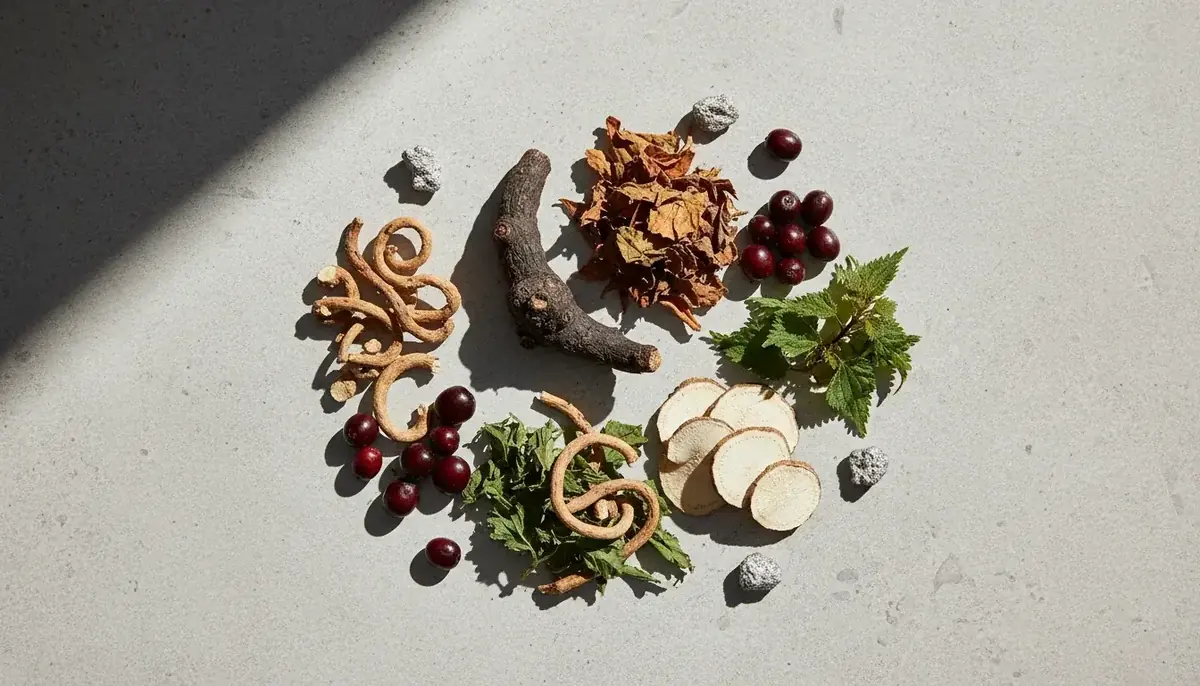
Five of the seven rows on the panel are extracts of a root or a berry, one is a leaf extract and one is a mineral chelate. The difference between the plant and the extract is the whole subject of the article on extract ratios, and it is the reason a row can print a small number and still represent a large amount of starting material.
What the research says about each Horsewood ingredient
Seven ingredients, four quite different evidence bases. Taking them as one thing is the mistake every page in this category makes, so they are separated here.
| Row | What has actually been studied | How strong that is |
|---|---|---|
| Tongkat ali | A 2022 systematic review and meta-analysis of clinical trials found a measurable rise in serum total testosterone in men. A separate six-month randomised trial in older men with androgen deficiency looked at erectile function and testosterone alongside training. | The strongest on this panel, and the only row with a positive human meta-analysis behind it. |
| Horny goat weed | Icariin, the named constituent, inhibits human PDE5 in a laboratory assay (Dell’Agli 2008). The 2024 review of the genus covers the chemistry and the quality-control problem in commercial material. | Real laboratory pharmacology, close to no human trial record for the herb itself. |
| Saw palmetto | The most studied botanical here. The 2023 Cochrane review and the CAMUS dose-escalation trial both concern urinary symptoms in benign prostatic enlargement, not sexual function. | Extensive, well conducted, and about a different question from the one this bottle is sold to answer. What 20 mg can and cannot do. |
| Wild yam | One controlled trial of a wild yam preparation in people (Komesaroff 2001) found no change in the sex hormones it measured. Diosgenin’s pharmacology is reviewed in Parama 2020. | One negative human trial, and a well-known chemistry misunderstanding. |
| Sarsaparilla | Nothing on Smilax ornata in people. The published work is on other species of the genus: Smilax glabra and Smilax china, mostly for inflammation and gout. | The thinnest row on the panel by a wide margin. |
| Nettle | The urological trials are on nettle ROOT, usually beside saw palmetto (Lopatkin 2005; the urticae radix review). Nettle LEAF has its own literature, such as a trial in type 2 diabetes. | Good evidence, for a different plant part from the one this panel prints. Why leaf and root are two different medicines. |
| Boron | A controlled trial in male bodybuilders concluded the training rather than the boron accounted for the change. Nielsen 2014 is the general review. | A genuine, small nutritional literature, and a negative result in exactly the population this product targets. |
Every identifier behind these links was pulled through the NCBI interface and read. Two candidate papers were dropped after an author-level retraction sweep and are not cited anywhere on this website.
What the Horsewood panel does not contain
Three absences are worth stating once, plainly, because each of them is something a reader might reasonably expect.
No stimulant
There is no caffeine, no yohimbine and no synephrine on this panel. Some bottles in this category carry one and the difference shows up as a jittery afternoon rather than on the label.
No prescription analogue
Screening studies such as Akuamoa 2022 keep finding undeclared PDE5 drugs in herbal products sold for this purpose, and Tucker 2018 put numbers on how common that is across FDA warnings. Nothing of the kind is declared on this panel, which is exactly what an adulterated product would also look like on paper. The reason to buy through a channel with a lot number and a refund route is that it gives you somebody to ask.
No vitamins or minerals other than boron
This is a botanical formula with one trace mineral. It is not a multivitamin and it does not replace one.
The other ingredients in a Horsewood capsule
Microcrystalline Cellulose, Gelatin, Magnesium Stearate. Three excipients, and each of them does a job.
- Microcrystalline cellulose is the filler. Seven extracts totalling 118 mg do not fill a capsule on their own, so something inert makes up the volume.
- Gelatin is the capsule shell itself. It is an animal product, which is the reason the vegetarian roundel on the sales page is worth a second look, and the testing page takes that up.
- Magnesium stearate is a flow agent. It stops powder sticking to the machinery during filling and it appears on a very large share of capsule labels.
None of the three is an active and none is present in an amount that does anything. They are here because the page would be incomplete without them, and because a label that prints its excipients is telling you more than one that does not.
How this Horsewood page was written
This desk publishes what the bottle says, and marks the places where the seller’s page says more than the bottle does. The four claims below are the ones a sceptical reader can audit in ten minutes, which is the only reason worth making them:
- The label is the source. The seven panel rows and their milligrams, the two-capsule serving, the thirty servings, the sixty capsules, the other ingredients and the printed caution all come from the label artwork the manufacturer ships, read directly. Not from a review column and not from an affiliate summary.
- Where two sources disagree, both appear. The panel prints seven active rows. The named list this desk holds carries six of them and the manufacturer’s own listing graphic draws the same six. Sarsaparilla is the seventh. That difference is set out on the label page rather than tidied away, and it is the reason this website counts seven.
- Sources are real and linked in the sentence. Every study cited here was pulled through the NCBI interface and read before it was written down, and swept twice for retractions: once at paper level and once at author level. Two candidate papers were dropped at the second sweep. Every government page was opened in a browser and checked by the title it returned, and four candidate links were dropped for returning a 404 that a careless writer would have shipped.
- Prices are quoted with a date. The supplier publishes no ladder of its own and defers to the seller’s page. The three figures on our pricing page were read from that page on 19 September 2026 and are labelled with that date, because the seller can change them without telling us.
We earn when you buy. Horsewoodcare is the Horsewood retail desk named at the top of this page, and this website makes money on orders placed through it. That is exactly why the dose-comparison table, the two three-star reviews and the page explaining what 20 mg of saw palmetto cannot do are here: they are the places where our interest and yours pull apart, and you should be able to watch us choose.
The order desk on +1 (641) 711-1414 and [email protected] handles tracking, address changes, cancellations and refunds. It is not a sales line and this website never presents it as a way to place an order; orders go through the checkout only. Write to [email protected] about the pages themselves.

Every page, every journal post, the bottle facts and the ingredients go through review by Dr. Kambiz Tajkarimi, MD before they ship. We write these pages from the printed Horsewood label panel, the manufacturer’s own listing artwork and this desk’s stock paperwork for lot HOR-26/HO-8034. We cite public research for tongkat ali, horny goat weed, saw palmetto, wild yam, sarsaparilla, nettle and boron, and we print “not published” wherever a figure is not disclosed rather than estimating it. This panel prints a milligram beside all seven of its rows, which is better than most labels in this category, and where a printed amount sits well below the amount the research used we say so on the page rather than in a footnote. Where the seller’s page claims more than the bottle supports, we say that too. Corrections are made on the page itself and the review date moves forward. Write to [email protected]. Last reviewed September 2026 by Dr. Kambiz Tajkarimi, MD.
Sources for this Horsewood page
- Leisegang K, Finelli R, Sikka SC, Panner Selvam MK. Eurycoma longifolia (Jack) improves serum total testosterone in men: a systematic review and meta-analysis of clinical trials. Medicina (Kaunas). 2022;58(8):1047. https://pubmed.ncbi.nlm.nih.gov/36013514/
- Leitão AE, Vieira MCS, Pelegrini A, da Silva EL, Guimarães ACA. A 6-month, double-blind, placebo-controlled, randomized trial to evaluate the effect of Eurycoma longifolia (Tongkat Ali) and concurrent training on erectile function and testosterone levels in androgen deficiency of aging males (ADAM). Maturitas. 2021;145:78-85. https://pubmed.ncbi.nlm.nih.gov/33541567/
- Dell’Agli M, Galli GV, Dal Cero E, Belluti F, Matera R, Zironi E, Pagliuca G, Bosisio E. Potent inhibition of human phosphodiesterase-5 by icariin derivatives. J Nat Prod. 2008;71(9):1513-7. https://pubmed.ncbi.nlm.nih.gov/18778098/
- Chen XL, Li SX, Ge T, Zhang DD, Wang HF, Wang W, Li YZ, Song XM. Epimedium Linn: a comprehensive review of phytochemistry, pharmacology, clinical applications and quality control. Chem Biodivers. 2024;21(8):e202400846. https://pubmed.ncbi.nlm.nih.gov/38801026/
- Franco JV, Trivisonno L, Sgarbossa NJ, Alvez GA, Fieiras C, Escobar Liquitay CM, Jung JH. Serenoa repens for the treatment of lower urinary tract symptoms due to benign prostatic enlargement. Cochrane Database Syst Rev. 2023;6(6):CD001423. https://pubmed.ncbi.nlm.nih.gov/37345871/
- Barry MJ, Meleth S, Lee JY, et al; Complementary and Alternative Medicine for Urological Symptoms (CAMUS) Study Group. Effect of increasing doses of saw palmetto extract on lower urinary tract symptoms: a randomized trial. JAMA. 2011;306(12):1344-51. https://pubmed.ncbi.nlm.nih.gov/21954478/
- Komesaroff PA, Black CV, Cable V, Sudhir K. Effects of wild yam extract on menopausal symptoms, lipids and sex hormones in healthy menopausal women. Climacteric. 2001;4(2):144-50. https://pubmed.ncbi.nlm.nih.gov/11428178/
- Parama D, Boruah M, Yachna K, Rana V, Banik K, Harsha C, Thakur KK, Dutta U, Arya A, Mao X, Ahn KS, Kunnumakkara AB. Diosgenin, a steroidal saponin, and its analogs: effective therapies against different chronic diseases. Life Sci. 2020;260:118182. https://pubmed.ncbi.nlm.nih.gov/32781063/
- Hua S, Zhang Y, Liu J, Dong L, Huang J, Lin D, Fu X. Ethnomedicine, phytochemistry and pharmacology of Smilax glabra: an important traditional Chinese medicine. Am J Chin Med. 2018;46(2):261-297. https://pubmed.ncbi.nlm.nih.gov/29433390/
- Wang M, Bai QX, Zheng XX, Hu WJ, Wang S, Tang HP, Yu AQ, Yang BY, Kuang HX. Smilax china L.: a review of its botany, ethnopharmacology, phytochemistry, pharmacological activities, actual and potential applications. J Ethnopharmacol. 2024;318(Pt B):116992. https://pubmed.ncbi.nlm.nih.gov/37541403/
- Lopatkin N, Sivkov A, Walther C, Schläfke S, Medvedev A, Avdeichuk J, Golubev G, Melnik K, Elenberger N, Engelmann U. Long-term efficacy and safety of a combination of sabal and urtica extract for lower urinary tract symptoms: a placebo-controlled, double-blind, multicenter trial. World J Urol. 2005;23(2):139-46. https://pubmed.ncbi.nlm.nih.gov/15928959/
- Chrubasik JE, Roufogalis BD, Wagner H, Chrubasik S. A comprehensive review on the stinging nettle effect and efficacy profiles. Part II: urticae radix. Phytomedicine. 2007;14(7-8):568-79. https://pubmed.ncbi.nlm.nih.gov/17509841/
- Kianbakht S, Khalighi-Sigaroodi F, Dabaghian FH. Improved glycemic control in patients with advanced type 2 diabetes mellitus taking Urtica dioica leaf extract: a randomized double-blind placebo-controlled clinical trial. Clin Lab. 2013;59(9-10):1071-6. https://pubmed.ncbi.nlm.nih.gov/24273930/
- Ferrando AA, Green NR. The effect of boron supplementation on lean body mass, plasma testosterone levels, and strength in male bodybuilders. Int J Sport Nutr. 1993;3(2):140-9. https://pubmed.ncbi.nlm.nih.gov/8508192/
- Nielsen FH. Update on human health effects of boron. J Trace Elem Med Biol. 2014;28(4):383-7. https://pubmed.ncbi.nlm.nih.gov/25063690/
- Akuamoa F, Bovee TFH, van Dam R, Maro L, Wesseling S, Vervoort J, Rietjens IMCM, Hoogenboom RLAP. Identification of phosphodiesterase type-5 (PDE-5) inhibitors in herbal supplements using a tiered approach and associated consumer risk. Food Addit Contam Part A. 2022;39(6):1021-1032. https://pubmed.ncbi.nlm.nih.gov/35323088/
- Tucker J, Fischer T, Upjohn L, Mazzera D, Kumar M. Unapproved pharmaceutical ingredients included in dietary supplements associated with US Food and Drug Administration warnings. JAMA Netw Open. 2018;1(6):e183337. https://pubmed.ncbi.nlm.nih.gov/30646238/
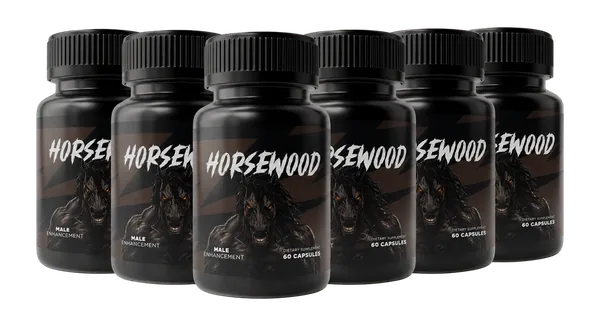
Order Horsewood through the official checkout
Three bottles is ninety days, which clears the four to eight week wait with margin and still leaves the decision inside the 60-day window.
$49 to $79 a bottle · 60 days from purchase to change your mind
Buy Horsewood On The Official WebsiteOne payment, no subscription · 60-day money-back guarantee · lot HOR-26/HO-8034 · order desk +1 (641) 711-1414